Calypso
They said the Goldmine Road was paved in dirt and deer blood. A lot of poachers resided there. There was a heavily wooded ridge to the west that went for miles and a half bog on the east side sodden and heavy, supporting a tangled array of scrawny alders. The entire area was forbidden fruit with a villainous reputation longer than a rosary by Aunt Lucinda. It was outside of any time I was used to, hovering somewhere between a wolf and a dog, more towards the wolf. It was early spring and I was near the end of my tenure as a school teacher, kind of near the end of my rope. I was giving Amalie, a smiley faced girl, from the high school a ride home. She was always all apples and cherries. Two of her front teeth crossed, like clumsy dancers. She lived on the Goldmine Road. That afternoon Amalie introduced me to her mother, Yeshro, who, two years before had divorced and moved to Maine from the Washington D.C. area. Yeshro was a teacher in another nearby district. Her full name was Yeshro Mattson but everyone called her Gertie.
Yeshro had purchased 30 acres on the high side of the road which came with an old cape. There was lots of hard maple which was good for heating. Because she didn’t like what skidders did to the land every spring she hired David Hodges, a neighbor, who entered with his team of horses to cull out six cords. Yeshro had taken on a sort of homesteader’s life with her brood. There was a flock of chickens, ducks, a mule named Pantuflas, a small herd of goats, and a basement chock full of canned goods. Home made everything. Ready for the coming Armageddon we all assumed would never come but that we secretly wished would rouse us from our increasing slumber.
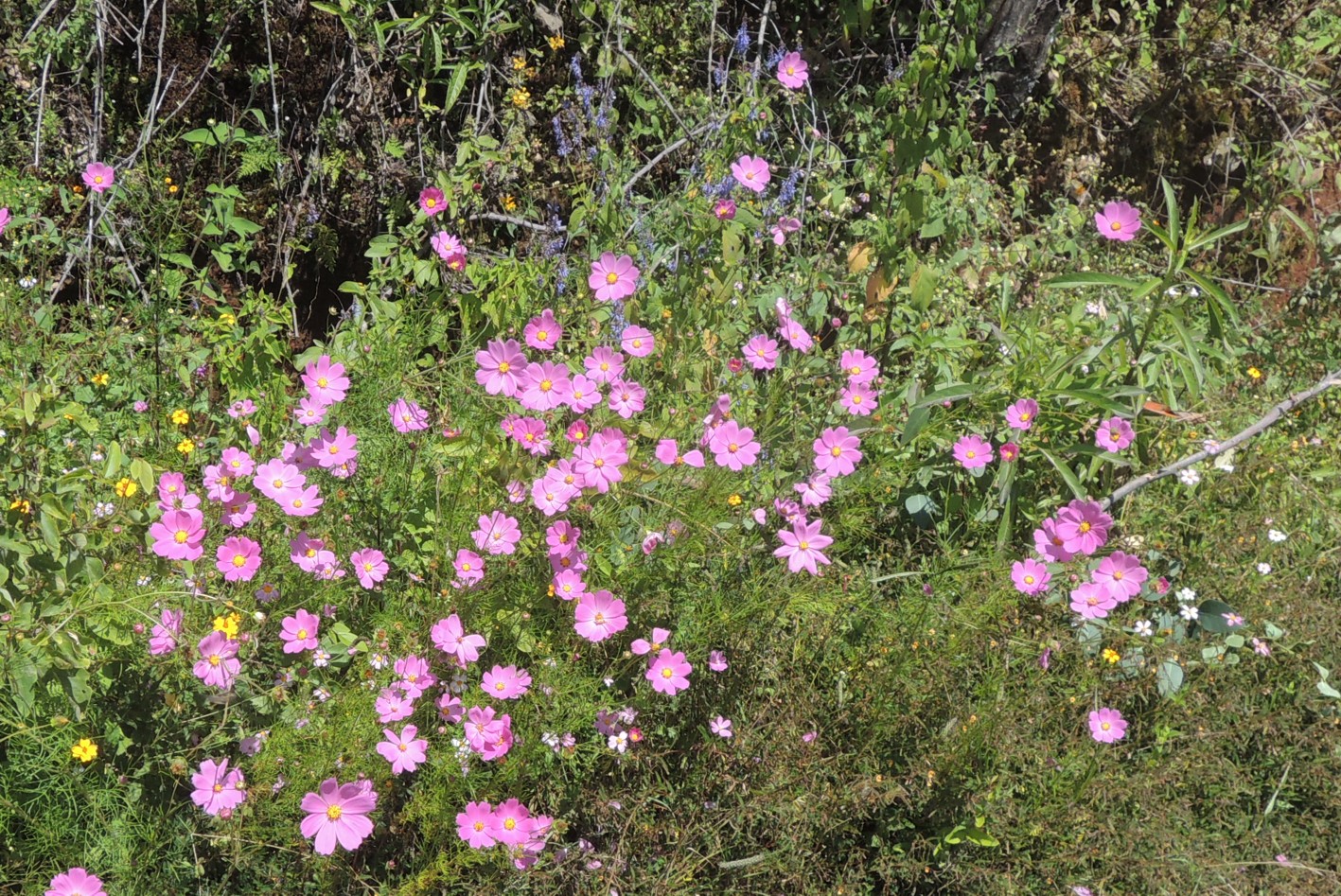
When I arrived with Amalie, Yeshro had just finished washing her curly salt and pepper hair. It looked all matted and tightly curled like a random wad of 8mm film. She was trying with great difficulty to run her fingers through the thick springy mass as she stood near the wooden rain barrel on the corner of the house. There were small yellow white flowers and petals still stuck in the frizzies. Yeshro was banjo faced handsome, her round chin cradled by her red Macintosh Apple cheeks. She was plump, a buxom body mounded atop two reedy legs, like a stack of warm shiny buns supported by toothpicks, yet it all worked somehow in unison. She seemed jolly chubby, the kind of woman that could hide three apples in her belly smile, and just as relaxed as her loose jeans and baggy sleeveless shirt. She didn’t wear a bra and the round sides of her breasts swelled out below her armpit. The sacred satchels. Her brownish green eyes blushed just a bit, as she stood upright and approached.
“Mom this is Mr. Rossi, Thomas. He’s the teacher I told you about.”
I approached and extended my hand. “Good afternoon, Yeshro, A pleasure to meet you.”
“Good afternoon, what’s your name again, Thomas?” She turned to Amalie and said, “Tend to the goats, Am, milk ‘em and feed them some of the tender timothy, and oh a ration of grain. Pardon me if I don’t shake your hand, Thomas.”
“That’s ok and yes, my name is Thomas. Thomas Rossi. What are those little flowers in your hair. Isn’t that water cold?”
“It’s cold alright. Colder than a witch’s tit.”
Tits again. Images of tits and nipples filled my head. I felt like a contented pervert.
“She continued, “In a sec though I’ll go into the house with some of that same rain water only this time heated for a delicious rinse. The flowers are chamomile. I make my own shampoo from suet and lye, and a variety of herbs, like lavender parsley, rosemary, sage. I use this mix added to rainwater, at least in the warmer months. It minimizes the frizz for which I am the poster girl. She swirled and bended a chubby knee and coquettishly placed one finger under her chin. The rain water doesn’t contain those nasty minerals.”
“Suet and lye? Opposing forces of the universe. I don’t know anybody who makes their own soap. We never drank tea in my house, only milk and water. My grandmother had two cherry trees and besides that, bless her heart, she would pick chives when they came up in the the back yard. That was the closest I came to gardening or foraging. My parents had two apple trees that put on a lot of fruit in the fall but we never ate them. They were considered a nuisance. We developed a fall ritual, bury the apples and burn the leaves. I always thought it strange but never questioned it. It just seemed retarded. I guess that’s life in the modern city.”
“You poor boy”, she said confidently. I was born and raised on the prairie, in Minnesota. We grew tobacco for money and everything else for to eat. Meeker County, the pampas of the Midwest, where we salted the earth with tobacco powder that turned into prairie gold. Olaf Stillson, my great grandfather, was one of the first to bring the cash crop to Minnesota. And then there was the Carnegie Library, oh how I miss that place.”
What could I say, I felt a little out of place in Yeshro’s world. Tobacco, and farming? I thought of standing in front of the rose window in The Cathedral of The Sacred heart bathed in healing light. The canalized Second River, Branchbrook Park, Stick ball on asphalt, shopping at S. Klein, and the Kresge Rocket Express. Libraries? There weren’t any books in our house, only Good Housekeeping magazines my mother stole from doctor’s offices. My grandmother and aunt, who lived next door, had one golden book, The Little Engine That Could, which I read at least 100 times. I think I can, I think I can, I even thought I could.
“Amalie told me about you. You are a teacher at Winslow.”
“Yes ma’am, art and English”.
I glanced over at the rock wall marking her boundary and basking in afternoon sun, and atop there were randomly placed #10 tin cans. Some hung from a few skinny apple trees. Poking out of them were red geraniums and herbs. It reminded me of some photos I had seen of Mexico. “You like geraniums don’t ya. My mother told me that her grandmother liked red geraniums as well.”
“Red geraniums symbolize that there is good in everybody. It’s a triumphant jaunty flower. They signal resilience”, she said making a fist.
“They certainly have an unusual aroma”, I replied.
“And it is indescribable. Herby, medicinal, lemony. There isn’t a word or a group of words for that matter that can accurately describe the aroma.”
“Perhaps they speak a foreign language. You know somethings don’t translate.”
“Yeshro smiled. She continued her attempt to comb out her tangles as she spoke.
“So, you make art now, do ya?”
“I doodle a bit.”
“Amalie tells me you are a good teacher. How did you end up here?”
“It wasn’t on purpose. I think I’m too wet behind the ears yet to have purpose. I kind of fell into this job. I wasn’t looking for it. I’m not an artist really but I do react well to painting.”
“How do you mean.?”
“I enjoy looking at paintings, kind of a fetish maybe, to dismantle techniques. At least I do that upon first viewing. It doesn’t matter, the content. You know, like standing in an old empty Maine barn and pondering the creation of that space, once, long ago, all sawing, pounding, lifting, noise that has long since disappeared into space. I get the same urge to dismember when seeing a machine, a machine whose parts are exposed, you know, that wears its heart on its sleeve.” I became a little self-conscious and my voice lowered. “After the virtual dismantling I consider the intention. I do the same with literature.”
“I think I understand”, she said. “You adhere to deconstructivism.” She pronounced the word heavily accenting the T’s.
I ignored what I thought might be a jibe and went on. “I guess when I was bored with sermons attending all those obligatory masses as a child, I steered my interest towards how that church in which I sat may have been constructed. How Rachel was painted way up there in the cupola, tears in her eyes, even how the cupola was accomplished. It’s perhaps a sense of wonder to deconstruct the construction. It’s the same with painting. I want to know how it was done. What does that make me? Certainly not an artist. There is more to a painting than just brush manipulation and undertones. One must learn to manipulate techniques. With literature I want to know the intention before I get into the grammar or whatever tools were used to create the work” I thought, Yeshro seemed a little deconstructed herself. “Do you enjoy art, Yeshro?”
“Call me Gertie. I like folk art”, she said firmly. “It seems pure, extracted from the soul of the land and the bottom of the heart. Modern art, leaves me cold and, frankly a little angry.”
“Why angry?”
“It seems artifice. The hoax overshadows passion.”
She didn’t really answer my question but I let it drop. I was waiting for more. All art embodied artifice, I thought. However I remained attentive supporting my chin with my hand, my fingers curled in front of my mouth.
“The themes in modern art rub me the wrong way. They don’t depict nature, they seem to create their own new version of nature, something unattached, unjustified.”
“Like a blind leap into a dark pool”, I said, ironically in my best non ironic tone. One can learn a lot by listening to another’s table talk.
Gertie began again, “There is something about the hills and dales of Appalachia out of which have come some unique artifacts, pottery, carvings, and especially songs. People, attached to survival in a beautifully simple yet sometimes hostile environment respond to that in artistic ways. People always have a need to express themselves. Even caves sport 40,000-year-old art. People in Appalachia, or in any frontier were no different. They reacted artistically to what they knew.”
She began to sing in a timid unsure voice, or at least I heard it that way.
'Tis a gift to be simple 'tis a gift to be free
'Tis a gift to come down where we ought to be
And when we get to the place that’s right
We’ll be in the valley of love and delight
When true simplicity is gained
To bow and to bend we shall not be ashamed
To turn, turn will be our delight
Till by turning, turning we come round right.
“That’s a Shaker tune”, she said.
“It’s from Appalachian Spring by Aaron Copeland. At least I remember that from seventh grade.”
“So, you know it then? It’s older than that.”
“Than me or Aaron Copeland?”
“Than Aaron Copeland silly face. The lyrics exalt humility”
Perhaps a little too much, I thought. Gertie spoke in an exclusionary way. Focus a light in just one place and leave the rest of the world in the dark. Perfectly undemocratic. Couldn’t tell the difference between a pot for beans and a subtle metaphor I bet. But did she have a point? Was I the one missing something? She sure was purty, swarthy and smooth skinned and that’s half the battle. WHowever was there ever a painting that came out of Appalachia that shook me? Folk art was too child-like, too infantile, like mud pies for sale. Then, of course, there was Henri Rousseau. A tax collector. He created a world of jungle imagination, something rich out of his narrow realm of experience. Life in a zoo. Grandma Moses was kind of flat in comparison. Should get out of this mire of paints. It’s shaky ground. Appalachia? Talk music. That is something from the ‘holler easier to digest. Music is littered with foot stompers and plenty of pain and humor. Rural sophistication. Yes! Find what you have in common. Then I added my two cents in order to uncover some comradery.
“From the hollers and hills of the Appalachians have come a lot of musical culture, some borrowed, some new. Piedmont blues, which I do so enjoy, was nurtured in Appalachia. A melancholy that embraces ya’ll with great fingerpicking. I especially like death songs too, like Naomi Wise, Pretty Polly, oh and especially Black Jack Davey. Minor chord merciless and sanguine funeral dirges.”
Gertie listened, perhaps surprised noticing I was purposedly trying to change the subject.
“Lot of death in those days”, she added, matter of factly. I like blues as well. Draws you in.”
“And even though it’s blue, it doesn’t let you down. And don’t forget the dark humor. It must be a bedbug cause a chinch can’t bite that hard.”
Gertie shook her head in affirmation and said, “Bricks in my pillow is a great image too.”
Here, in this homestead, an easter egg diorama, it is better to talk Etta Baker than Charlie Bird.
“No, you couldn’t take it for granted, Lord Death. Perhaps it’s the Mexican part of me to see death as a person not a fearful termination. The Appalachian valleys were flooded for electricity, their mountain tops stripped of coal, but before that violation there was death, murder, and sad stories.”
Gertie put on her teacher cap. “Some forms of which immigrated from the Irish and Scots who brought their own sadness to the hollow. Terrifying songs, at the time, must have had the same effect as tragic news programs. You feel better about your own condition but are more cautious when you leave the house the next day. It reinforces the mystical nature of everything as well.”
“That’s true. Good point. Mom kisses the kids goodbye saying she will return by dark and then of course the weather suddenly turns and mom is sucked under the rising waters of Fifteen Mile Stream. Those songs to me thicken the past like water does to flour. There is realism in that “before-time” when death is about you like a hungry banshee. The poems of Emily Dickinson, half of which concern death. She fairly caresses death. “I heard a fly buzz when I died.” Or “I could not stop for death but he kindly stopped for me.” Death seemed closer then than now.”
t was spring. The Sun was down there hanging out near the horizon, just waiting for the change. By 6:00 in Maine it warned the birds to hurry up now and find a roost. The light flickered through the oblique openings between the branches of the tree tops, just beginning to ooze tender leaflets. Evening was coming fast. There was a large vase shaped elm on the front lawn of Gertie’s house just before it sloped down towards the road. From a high branch was suspended a tire, like a swin I was on a roll thinking I had uncovered a vein of gold.
“In Troy in the very back of the cemetery, the oldest part, there are groups of mossy marble stones that date from the 1600’s. Whole families died in the same week. I don’t think we could know how difficult life was back then. I feel spoiled.”
“Stay here on this road for a bit and you’ll see that some of that life it still exists. Well Thomas, on that heavy note, would you like to come inside for a cup of tea, chamomile of course. I grow it here?”
“So, it’s a shampoo and a tea. Sure, I like double dipping. That’s convenient.”
Ig. It must have been thrilling to grab the tire near the house where you were close to the ground and swing out as the earth below sloped away. I thought of the canoe trip on the Delaware River I organized with some friends in high school right after we read Huckleberry Finn. It was magical. From above Hancock New York to the Delaware Gap. I still can’t believe our parents allowed us to go. In Hancock the river was deep and dark. There was a bridge that spanned the entire river. Some local souls had hung a tire from a girder with a steel cable. One could stand on a ledge where the bridge was anchored and pull the tire to them by means of a rope. Hold on tight and swing out over the river then let go plummeting into the tannin saturated waters. We blew half the day without a care in the world swinging and dropping.
Gertie’s house was clad in oil-stained clapboards. We entered the side door into the kitchen. Dark green and blue wallpaper obscured the space. The wooden floor creaked. The kitchen was dominated by a large black cast iron wood cookstove, a steam engine of sorts, with an appetite for lignin. Gertie placed a pot filled with rain water on the cookstove. On the left-hand side of the sink was a dark blue pitcher pump. Where am I? No, she has no electricity. After a few clanky strokes water began to pour from the spout. She filled a heavy cast iron teapot with water and put a few pieces of wood into the cookstove.
“Do you mind if I rinse”, she asked.
“Not at all. Want me to go outside?”
“No, no, that won’t be necessary. Just sit there while the water boils for tea. But you can look away for a minute.”
I didn’t know what she meant. She brought the pot of rainwater from the stove to the sink then turned away from me lifting and removing her shirt. I stared at her bare back and those iconic female dimples for a second then turned towards the wall. That’s a bold move. I heard her ladling warm rain water from the pot to rinse her hair. I sat there in fascination supporting my head with my hand staring at an old photo of a darkly bearded man on the wall. There was a strange name on the photo, Tequirassy. I listened to the sound of dribbling water and held the image of pearly droplets on her swarthy skin, when the man with the beard stared me down. The aroma of chamomile filled the room as the water in the teapot began to boil. A poem I had written years before came to mind.
Their nobility forever ordained,
In the golden light of Elysian Fields.
Love, melancholy, courage and devotion,
They whisper in honorable innuendo.
Their taste is impeccable,
While dressed in lowly hawl,
Sovereign’s minion heroes,
They bolster with no need of thorn.
Gertie finished and spoke.
“You can turn around now.”
I turned to see her clothed, but in a different light. “Sorry I didn’t move quickly but you didn’t warn me.”
“You look like you needed a jolt. Besides I have never been shy. A girl has to feed her self-esteem.”
“On that note, of what is the sink made, Gertie? It looks like the one my grandmother had in her basement.”
“Soapstone. Must be 100 years old. Got it at the Burnham Auction. A real find. Too dark for modern kitchens but it has proven its worth. Some woodstoves are made of soapstone as well. It takes heat very well.”
“A hundred years old? It’s in good shape. Ample and deep, a two holer.” I paused. “What the hell lasts one hundred years these days? Things are usually broken by the time you arrive home.”
“Come over here and touch it. It’s strange to the touch.”
I stood up awkwardly, walked over and stood next to her. She gave off the aroma of flowers. Then Gertie took my hand like a child and ran it over the scarred edge of the deep two bay sink. It feels soft somehow. How is that?”
“It’s made of talc and minerals.”
I tapped it with my nails as was my custom to test materials. I’m always tapping the columns in malls that are made to look substantial but are really veneers. “It’s dead, like a zinc penny.”
“Same sound as soap.”
Gertie lit the wall hung gas lamps that emitted a yellowish white light all the while hissing like a permanently startled cat. I thought I had passed through a time portal. She used gas lamps for lighting. Each lamp was backed by a sort of corrugated metal pie plate meant to disperse the illumination. Still the light in the house was not crisp, a bit fuzzy. It seemed a little thick like chowder as if one could see individual photons yellow white as they bounced about in the air The light obscured edges of everything. We’re all chamfered, we’re all defective yet beautiful. Gertie checked the tea the aroma which pervaded the room and added a few sticks to the stove. The kitchen smelled of wood and potpourri.
“Honey?”
“Pardon me, what?”
“Honey, would you like some honey? It’s goldenrod, from last year.”
“Yes please. You keep bees as well?”
“Eighty-thousand head. One hive only but it’s more than enough. Then she recited, The sweetness of life lies in usefulness, like honey deep in the heart of a clover bloom."
“Who said that?”
“Laura Ingalls Wilder.”
“How much does your hive produce? After all the season must be short here.”
“The season is long enough to produce from 80 to 100 pounds.”
“Bet you get stung a lot. I’m not an aficionado of bee stings. Stepped on a yellow jacket hive once while at summer camp. It’s still a vivid memory.”
“Once in a while I get stung but I’m all suited up with my smoker a’smoking?”
“What does the smoke do?”
“It makes them suck honey and become docile.”
“Like turning a crocodile upside down and rubbing its belly?”
“I don’t know about that”. She giggled a little. She had a problem with pronouncing her L’s. Lallation I think it’s called.
“Would you like to try some suet pudding with your tea?”
“Look, I feel a little embarrassed. I don’t know what suet pudding is but I’m easy. Bring it on.”
“Suet is the fine fat surrounding the kidneys. Add some flour, raisins, or dried fruit and bake it in a can, in this case an old coffee can. Suet is good for making soap too.” She seemed to delight in serving a dummy. That pedagogic thing that kicks in when the ground is uneven.
Gertie, who seemed suddenly and oddly motherly stood with her butt against the stove. As her hair dried it lost its watery weight. She lit a cigarette. The stove lids and oven door clanked when they were opened and closed as she cooked and baked and heated hot water. I was a little inebriated by the gauzy half-light. Then my mother’s voice intruded on the scene. “Filthy Bohemians.” She still guarded all that I saw, the devil in a blue pom pom fringed dress coquettishly twisting to Chubby Checker asking how do you like these legs honey? And look where you installed yourself in that stark pigsty of a Maine with all the farmers in overalls, named Wormwood, and Flagstone, and Flickett. Money, you can’t do anything without Money. The three M’s, Money, mind, and what’s the other. She hesitated a moment, as her small pupils like mini pool balls ricocheted in their sockets in a psychotic break, and then spurted out, “and sex.” She quickly added, “FINE feathers make FINE friends.”
My parents were devoted chevy people, my mother dedicated to the erection of three tier colorful Jello molds, and organizing afternoon bridge games with drinks, Platters of curled speckled cold cuts that resembled cheesy-meat hubcaps adorned the serving table as the women present bantered about all that didn’t count. We were lucky to get some left overs. It seemed like she had carefully counted out the slices of prosciutto and Swiss cheese so almost nothing remained. Cerri’s antiqued lifestyle was something that repelled and attracted. I was tired of the empty competition. The simplicity appealed. I resisted. I tendered an urban doubt to putting on bib overalls and organizing a hootenanny. It nagged me, yet there was a charm to it all, especially since I was vulnerable, ignorant, and had only recently come off of what seemed a failure. The chamomile tea was smooth with a sensation that it made it seem more viscous than just water. The flavor hinted of vanilla.
“Thomas Rossi, is that Spanish?”
“Sort of an agave with a deep Italian taproot, ma’am. My father’s grandfather, with his wife emigrated to Mexico from Italy in the late nineteenth century and landed first in Vera Cruz. He ended up somehow in a small Italian community in a town called Tlaltizapan then finally settled in Chiapas, a state in the southern part of Mexico, twenty-five hundred light years from New Jersey but most likely a little closer to Maine. I can’t imagine who lead him there. There was no established immigrant trail.”
“What village? When did your family arrive, or how did they arrive,” she asked?
“I don’t know when or how, just that Italy’s unification was still fresh so immigration was common, although not so common to Mexico and less common to the State of Chiapas. The town in which they ended up in Chiapas was called El Zapote. The story goes that my grandfather, Alfonso, left El Zapote at the age of 13 after his parents had died. His father, my great grandfather, was killed in a dispute with a neighbor and his wife died two years later from typhoid. In 1895 more or less he made his way first to a city near his village where he found work as a butcher’s helper. He stayed for three years then he took off for the States. It’s the family story that he walked and worked his way to the border. Supposedly he carried a letter from an uncle who lived in Newark, New Jersey with a promise of work. I don’t know much about his journey but I bet that is a story in itself. I just know a few facts. He married my grandmother, Canaria, who was also of Italian heritage when she was just 15. Her parents were grocers. They stayed married until his death in the late 1950’s. When he arrived in Newark in 1901 it was trolleys and horse drawn wagons and a vague promise. The few cars that existed in that epoch didn’t look like jelly beans. They had distinguishable fenders. In fact, Papa owned a horse and a cart. Imagine that. Probably you can. One family story says once his horse and cart were hit in the Ironbound section of Newark by a trolley. He escaped but the horse did not. He never learned to speak English very well,,,,,, he spoke Italian and Spanish. Opened his own butcher shop and store on Bloomfield Avenue in Newark selling meats, cheeses, and canned goods to the Italians in the neighborhood. Did quite well for himself. Never owned a car and took the bus to work. Arose in the dark and returned late every day. I saw him Sundays for family dinners. That is what I know.”
Gertie sat there for a moment I think dissecting this sketchy immigration story then said, “Have you been to Mexico”; she asked?
“No, not yet, but someday I want to find this El Zapote.”
“Do you speak Spanish?”
“Yes, I get by. It’s amazing, you know, because my parents spoke only English to me. They spoke Italian between themselves. It was their private coded communication. When a language isn’t directed at you it is unintelligible and has the tone of background noise. Not noise really, but a melody without lyrics. I learned Spanish in school, a little from my grandfather, and from a Puerto-Rican who had a small miscellaneous store on the corner. He ran the numbers. I helped him sometimes in turn for cherry cokes and Spanish lessons.”
She chuckled, then added, “Hardly anyone learns a foreign language in school.”
I snickered a bit remembering Spanish class. “My experience was just that, being captive in a league of lotus eaters, but I persisted somehow. I wanted to learn something.”
“You sound resentful of your parents. Are they still alive?”
“Hey don’t jump to conclusions. This story is more complicated.” I paused then began, “Like all stories including, I imagine your own. My father died a few years ago. I think he loved me in his own way but a difficult marriage steered him away from his true self. It seemed to erode his inner character. Let’s call it praying mantis seduction syndrome, the spiney insect with a black dot in the center of its large emerald eyes that orbit in its little triangular head. The female will devour its mate and possibly its children as well. That is just the facts ma’am. This guy, my dad, was the football star, all state quarterback, a war hero sort of, a man with a statewide reputation for being tough but in marriage he was mystically drained and became passive, ambivalent. Away from my mother, even for a few hours, and he regained his street sense, but upon return he immediately regressed as if controlled by an unseen hand. It’s difficult not to hold his uncertainty partially responsible for the toxic atmosphere in our home. However, if it wasn’t for many moments of sanity from him, and my grandparents I would be irreparably damaged. My mother however was a more complicated issue.”
“So, you are saying your father was kind of wimpy.”
“I don’t think so. Why do you say that? It’s a word that evokes weakness. Possibly I have portrayed him wrongly. He was honorable and definitely street tough. My mother had a machine gun mouth and could confuse anyone closeby with her fusillade of illogic. She shot out word volleys that could change direction so rapidly that a sensible person would think he was being attacked by an entire platoon. One time, I remember, when we were speaking on the phone, she was particularly heated and delivering a rapid-fire oration on a few different subjects. She rarely stopped long enough to listen or wait for a response. I grabbed an envelope and began writing down what she said.
I never saw anyone live like you do. You don’t have a TV in the house. To have a TV in the house is knowledge.
“I think here she asked me if I was attending mass and I made some remark about Catholicism.”
Nothing wrong with the catholic religion, after all He came from a catholic country.
“The Newark riots were recent so it was fresh in her mind.”
And those blacks. We ought to blast them off the earth. I don’t know what God had in mind when he created them. They’re ugly. It’s sad, it’s sad, I don’t know anything.
“How’s Dad, I asked in order to change the subject?”
Your father? That guy. He would have made a good professional pall bearer.
You’d have to be Audey Murphy to address a fusillade of discursive statements coming at ya from different directions, like arguing with a barking dog. I know what you are thinking. Why didn’t your father just leave. Well, there were his three sons. My father was too honorable to leave. Maybe he just gave up. For as much as memories count as fact, I remember an incident when I was eight years old. The family belonged to the Colony Swim Club, a summer retreat for suburbanites that sported a pool, shuffleboard and activities for children. It also had an open pavilion with chairs for the Jews who played mahjong and the Italians who played gin or bridge. There was this guy named, "Russ". He was in charge of the pump room out back near the cheaper lockers. He always wore a guinea tee shirt. I do not know for sure that he was a drunk but he spent a lot of time inside the pump room sitting on a chair. We, myself and some other children, were playing one day and running back and forth between a picket fence and a little strip of grass. There wasn’t much grass at all at the Colony. We had made several passes in front of the pump room and once when I alone passed the door Russ was sitting there surrounded by blue painted pipes and humming pumps. He made a guttural raspy sound with his throat. I looked up because the sound was so unusual, then he took a swig from a soda bottle, I think filled with water, and spit it all over me. The water was a shock and I was scared because he looked so aggressive and I wasn’t sure if he was a little drunk. I suppose drunk is something at which I am grasping to explain his behavior. I was insulted and confused. I went to the pavilion where my father was playing gin with some friends and I told him what had happened and that's when he took off running. An "encounter" took place. I was safely yet excitedly ensconced behind my father when he asked Russ if he had spit water on me. Russ rose up and cursed him in a raspy voice his mouth curled in disgust, the inside all red like a venomous lizard. My father enraged picked up a hammer and held it aloft. Russ hissed but backed down. I was frightened for I saw a raw rage in my father that was new to me. I thought he could have killed Russ at that moment but it all ended as fast as it began when friends intervened. It's ironic because later in the summer I remember that "Russ" would make huge kites out of newspaper, glue, and a few slats of wood then fly them off into the distant sky until they seemed like small dots above the horizon. The kids loved this. I was a participant still wary of approaching him but he didn’t seem to remember the incident with my father.
“He must have been drunk then”, Gertie said.
“Probably. You know, I always felt more secure with my father after that incident. I knew he would protect me when push came to shove, or even less than a shove. I was never sure my mother might protect me. I always thought she might turn me in. My father, given the right circumstance, would have thrown a hammer at the head of anyone in the protection of me, friend, foe, or even a priest, but not my mother.
Gertie said, I didn’t mean to imply your dad wasn’t worthy”, when I cut her off. I needed to keep going, as if I were defending dad in court.
“He could be tender too. I remember the last time that I saw him when he was dying in the hospital. I had been in New Jersey for two weeks and needed to return to Maine just for a few days. I visited the hospital early in the morning before my departure. My father was in the room with that Haitian nurse whose blank expression unnerved me. He was pretty drugged up, hazy, and swaying like a junkie sitting in the chair. For a just a brief moment he emerged from his morphinated cobwebby trance, a moment very important to me. He perked. “Thomas", he said, looking up to me from his chair as if I had been away at sea for three years. My name was emitted with a grand sigh of relief,,,,and a loving tone that I will never forget. He must have been scared. He extended his arm and cradled my head with his hand bringing it forward. He kissed me there on the top of my head so gently and sweetly, and then, he let go returning to his sepulchral wait,,,,,immersed in haze, but I knew that he knew that this was the end. Two days later, back in Maine the phone rang early in the morning. My brother spoke two words without any preface saying, "It's over". I knew from the moment the telephone rang what information would come over the line. It was truly "over".
Gertie spoke.“Do you think you came out of this harboring women issues?”
“Did I give you that impression? Hell no. I love women yet it may be too soon to tell how I’m affected but I think I’m no more wounded than anyone else, perhaps much less.”
“And your mother?”
“Thanks be to God she was a clown. You can’t take a clown seriously. That’s important. She didn’t know it, but her oafish theatrics protected me from psychological harm. It’s the serious Mom that kills. During the performance you are not laughing inside but being sliced. My mother”, I said my mind drifting away. Feeling self-conscious and uncomfortable, that I had already revealed too damn much I said, “I don’t want to be rude but I should go. I thank you for your hospitality,” then I excused myself but not before asking if I could come back sometime.
“Of course, Thomas”, she said with a Cheshire cat kind of smile, something I didn’t know how to take.
The snow had melted and the still frozen earth at first turned a cold shoulder but soon it softened and gave heart to the reawakening of mud and flowers. I saw Gertie several times after our first meeting. She taught me a lot about her lifestyle. I learned about bees, goats, gardening, and preserves from Gertie. One april evening we sat outside her kitchen listening to the peepers in the marsh across the road as they bullied the air. A loud hypnotic glee club. They filled your head with their shrill urgency. When the chill became too much Gertie invited me inside for a tea. While the water boiled and I sat at the kitchen table she went to a nook under the stairway where there was a kind of futon with quilted pillows that held the heavy aroma of wood smoke. When the tea was ready she poured two cups and led me to the alcove and told me to sit. It was like an order. She lit some candles. The light was thick and deep yellow.We sat down side by side.
“Nice spot. Cozy,” I said.
“It’s my reading room.”
There was a pause as we sipped the tea.
“Well are we going to read then”, I asked?
I saw something in Gertie’s face. It was the way she nodded as the curls on her head bounced loosely. She was a thick one.
A jowely jolly hertie gertie,
pudding and deep dish pie.
Corn fed roly-poly.
A bit ‘o’ the goddess, I will not lie.
Mi mug I plunged into ‘er breadbasket,
And when I yanked and tried to pry,
There came an epic suction,
And I nearly left behind mi left eye.
The edges of her rosy cheeks were translucent like like a warm light bleeding through a thin slab of onyx, and her laugh so pure and child-like.
I was feeling lucky and optimistic. An inconspicuous pool of drool began to form at the corner of my mouth, when she reached down under the futon. The candles wavered at her movement. Then she breached with a raggedy ass copy of The Farmer’s Almanac in her hand.
“Jesus, now that’s a surprise.”
“What did you expect", she said coquetishly?”
“Not that for sure. What’s the date on that volume”, I asked?
“They’re from various years. I found them in the walls upstairs. Some were really deteriorated so I made one big volume out of the scraps. From the 1800’s to 1941 I think. Let’s take turns reading.”
Gertie began with a poem above the month of April.
“The virgin heard, and thus replied : " If my consent to be your bride, Will make you happy, then be blest, But grant me first one small request ; A sacrifice I must demand, And in return will give my hand. A sacrifice ! O speak its name, For you I'd forfeit wealth and fame ; Take my whole fortune — every cent — ' something more than wealth I meant.
“April, it’s the month of plentiful virgins.”
“Now you choose and read”, she said.
I thumbed through the worn pages a little and settled on the title, How to Destroy Cockroaches. “This might find use applied to politicians and bad neighbors”, I quipped.
A correspondent of the Montreal Witness says: “ Several weeks ago my house had become so overrun with cockroaches — that I seriously intended leaving it for two or three nights,’ to give these pests the benefit of a good dose. I happened, however, to read in the Witness that powdered borax’ was a cure for them. It was tried and proved efficacious. Now and again a stray cockroach is seen, but certainly not one where there were hundreds before. Those that make their appearance have a sickly, attenuated look. Their air is so dispirited that the simile ‘lively as a.roach’ could never apply to them. The borax is used by sprinkling upon. shelves and wherever the enemy ‘ most do congregate.’ It is a safe remedy and one that deserves to be known. I thought for a second then added, “the vocabulary and syntax are interesting. Very few speak like that now. Who the hell now uses “attenuated” to describe the look of a cockroach?”
“Here’s one, Gertie said excitedly.” A school word exercise was soon after the revolution, given to one of the students a Westminster school in London. The word was Saratoga. On which he immediately wrote an epigramatic couplet in Latin, Burgoyne, heu! fatis futuris ignarus, per silvas viam secare potuit, sed non per Gates, of which- the following is a translation. Burgoyne, alas! unknowing future fates, Could cut his way thro'' Woods, but not thro" Gates.
“Written in Latin first? Wow! What does that say about our school system? This fellow summed up the Battle of Saratoga in a rhyme,,, in Latin no less. We have seen the best of our times.”
Gertie moved closer to me. She felt warm as her love handles easily touched mine. Then she said gently, “You’re turn Tommy.”
“I scanned some pages then something caught my eye. This might be good.”
By the year two thousand it is probable that manual labor will have utterly ceased under the sun, and the occupation of the adjective ‘“ hard-fisted” will have gone forever. ‘They have now in New Hampshire a, potato-digging machine, which,,drawn by horses down the rows, digs the potatoes, separates them from the dirt, and loads them up into the cart, while the farmer walks alongside, whistling ‘“ Hail Columbia’ with his hands in his pockets.
“ Is he bragging or complaining”, I added. “I’m not sure.”
“It’s a complaint cloaked in dry humor, I think”, said Gertie. “I believe an old farmer, being shown the future of potato harvesting by a salesman would have been immediately skeptical as was his nature. After the machine had done its work, that farmer would not have reached for his wallet but have reached for his potato rake and gone down the row uncovering spuds the machine had overlooked. That’s the deal with those machines. They sell ease and speed. The old guy might then have leaned on his rake and said,,, now sir,,, that darned contraption left a half bushel in the furrow that any good farmer would never have passed over. That’s ten cents per furrow.”
I was feeling impish, not wanting to defend progress, but needing to stir the pot, as was my custom. It was a feeling comes from not yet knowing what to say.
“Of course 5 years later the bottom dropped out of the potato market and the independent old farmer would have gone bankrupt. His forward looking neighbor, however, who had bought the cursed machine squeaked by because the machine had allowed him to plant more acreage and in addition he didn’t need to hire help during harvest.”
Then Gertie said, “What potato market? The old fellow would not have been locked in on just potatoes. Strawberries, pumpkins, and firewood would have rounded him out. He always lived modestly and could have sold his harvest locally. And he didn’t have to pay his children to help bring in the crop. The new modern farmer became locked into the “time is money” mechanization scheme, every few years upgrading until finally he and all his believers went to the poor house. I’d bet on the old farmer with a potato rake. He’d persist.”
“But they never persist. Those guys are all in the cemetery and their headstones are wearing away, so much so, that you can’t read their names. This system is not conducive to small change people.”
“Perhaps.But the modern farmer will eventually fall. He stayed in the race, made some money, all the while acquiring a more and more debt. He was able, at first to send his kids to university. There, among a flock of other farmer’s sons and daughters they changed. There they were sold another bill of goods. Afterwards all found “good jobs”, running fast as they could in the opposite direction of the family farm. One easy move, desperately avoiding the shovel, the plow, and the sweet smell of cow manure.”
“Yeah, that sounds right, Gertie, Even the modern farmer will eventually become obsolete. He’ll be left behind crippled with arthritis, debt, unsure markets, and his John Deere 6 bottom plow. There he withered with the fatal knowledge that there was no one else to carry on. How ya gonna keep ‘em down on the farm after they’ve found split level paradise in Quincy. Then one day some dude with swagger and a wad of cash shows up and the tired old guy is convinced to sell the farm. The dude subdivides the land into lots that the dude mortgages because he has an “in” at the bank and another piece of history is buried under asphalt and vinyl siding. Every cloud has a lead lining. I know I’m right. I know it because it’s the Jersey in me. I always expect to be screwed by the march of time. What is the solution? Everyone has a victory garden? California tomatoes that double as car bumpers are now the accepted norm for most.”
I began to take Gertie’s side. A perfect reversal. My impish behavior, I thought, had paid off. Gertie took up the mantle.I felt relieved.
“It isn’t easy to revive these corpses now that they have been entombed under layers of soil. There aren’t too many left that remember the way it was. Like a one room school house. They were better because they taught responsibility. The older students were employed, figuratively, as teacher’s aids to help tend the younger flock. Students were charged with cleaning up, hence no janitors, and one student was selected each week to start a fire in the wood stove in the early morn. You have spoken to the older residents who live in this area. They came from that system, and they all could find Sweden on a map. It worked. Now we need a building for kinder and primary, another for middle school, and a huge high school, now a regional center 15 miles away with 1500 students which requires busing. And don’t get me started on sports. That’s one way you lose community or at least give it a bad face lift.”
“And the old man with the potato rake has become a folk song.”
Well yes, I thought, but the Amish get it done,, have been getting it done for a couple of centuries. They are a strict religious enclave of resistance, an oddity. The old potato rake guy didn’t come from that format. He was just an old Yankee with yankee ways. Even the authoritative puritans eventually got diluted. I really don’t know how the Amish have pulled it off for so long. And yet they are expanding. They lose a just a small percentage to the devil.
We continued reading and talking, poems, ads, recipes. Gertie read a recipe for steamed cherry pudding then took my hand in hers. The back side felt silky and the palm calloused.
STEAMED CHERRY PUDDING 1/4 cup butter 1 1/2 cup milk
1/2 cup sugar 1% teaspoons baking powder
2 egg yolks, beaten 2 egg whites, beaten
1 1/2 cups cake flour , 1 pound of ripe cherries, drained
My finger began to draw circles on her palm.
METHOD: Cream butter and sugar, add beaten egg yolks; sift together baking powder and flour, and add alternately with milk. Fold in beaten egg whites. Cover a deep dish with pie cherries, drained; pour batter over and steam one hour. Serve with sauce made with the cherry juice:
Cherry Sauce
1 tablespoon cornstarch 1/2 teaspoon nutmeg
2 cups cherry juice
METHOD : Mix together dry ingredients, add cherry juice and cook until thick and clear.
The cherry recipe did it. We were silent for some moments. I felt myself disassembling. Outside the peepers called frantically. I turned to kiss her. She grabbed my neck and kissed back hard. The kiss lasted what seemed like forever. We pressed against one another in a surge of touching. Severely focused. Our movements disturbed the air. The candle flames rippled and danced. Like shadow puppets our figures were cast upon the walls and the bottom of the upside down inclined plane of the stairway. I always liked geometry.The shadows flirted and overlapped. I could barely hear a log in the wood stove that shrilly whined like a desperate tea pot. Didn’t need heat now anyway. Didn’t need anything. This energy was carrying the evening. We fumbled with buttons, stubborn now, resisting growing determination. Seeking lips and necks not wanting to bow to interruption as if we might break the spell, at the same time trying to be quiet. Yet all the while removing layers in order to feel the contact of flesh. Two souls falling out of character on a narrow futon behind a stairway, searching for that unconscious moment of joy and release.
A week later Gertie visited my art class. She sat in the front observing and at one point during the session she came up to me and asked, “How can you restrain yourself from not talking more in class?”
“You mean stand up there and give a general lecture?”
“Yes, I think so. Don’t you let them work on their own far too much?”
She posed it as a question which made it less aggressive but before I could answer, the bell suddenly rang. I asked Gertie if she was up for a cup of coffee. We picked up Amalie, and went into Waterville for a café and talked more. I explained that it wasn’t my style to lecture. I take them off the leash and give them a project all the while offering them individual nudging. I found I could do my thing as they worked at their desk, like a counselor. Each got what they needed on a personal basis. You see 75% of the students in my class chose art over social studies thinking this would be an easier grade. The other 25% harbored a need for a creative outlet. Well then, really, we all have creative outlet issues much of them suppressed. Many don’t realize how important it is to have the opportunity to express themselves. The standard model of education teaches obedience, which frankly is just not my thing. They all got right into it. The hands-on approach worked. Everyone seemed to come away with less disrespect for the forced march.”
“Didn’t you run into resistance with the majority?”
“Yeah, that was difficult at first. The more difficult job was to alter the minds of those that sought easy credits and show them art was not just a place where they could briefly float atop the water in a heated pool. Then, the difficult part, to convert their established prejudices about art into some form of respect for expression. I try to discover a student’s predilections then work with them in a personal way. Each gets to choose a project using a palette of materials we have collected but with one requirement, we must take that project seriously. I will visit their desk one at a time to make suggestions. For instance, the other day I could see Melissa was struggling with the portrait of a woman and was mired in creating skin color so I sat by her side and gave her tips on technique. Skin tone isn’t achieved by employing just a flesh-colored pencil. It is made up of many colors of different color values, shading, and highlights. I showed her how other artists had handled this problem. In a similar way I counseled Bobby about his colorful free form flighty psychedelic doodles in attempt to coax him back to earth. I introduced him to more mathematically organized Arabic calligraphy and architectural design. The more complex designs seem like mantras, which appealed. I presented him the paintings of Fernand Leger. His paintings use numbers and geometric shapes to create cubist images.
A cloud came over Gertie’s face and she reacted sharply. “That is exactly the kind of art work I find indigestible”, she shot back.
“Perhaps the technique is just unfamiliar.”
“Maybe. Artists must work to develop their craft. It’s not all presto chango take me seriously, this is art.”
She was rejecting before considering. I thought she could be talking about vocational school, yet, because now we had a history I felt a need to consider her statement. It seemed in the past most artists passed through an apprenticeship, a guild, or an art school. There was a carefully guarded stairway to becoming a master. Conceptual art could only have emerged in the modern era. Yet a conceptual artist might have come from an academic environment, like Duchamp, or from a non-academic one, like Klein. My guts told me neither would be acceptable to Gertie because she considered their methods and content invalid. Besides she seemed irritated today for some reason. This is a provincial mind at work I thought. One must learn the hard way, draw from nature and never venture too far out of the corral. Imagination should never cross over into unknown pastures. Sweat is the cost of success and she may be right. Francis Bacon would make her puke. Why is it they can admire the mystery in spalted wood but not glorify intentional defects in a portrait. Only time and a single hair brush is able to shape acceptable art. There are no shortcuts to creation. First you must know how to grind your colors. No, that’s not enough. First you must mine the lapis lazuli. It’s good an artist knows where the materials come from but you don’t necessarily need to build a guitar in order to play music.
Then she woke me up from my thoughts saying, “Art loses itself in obscure statements. It’s not its place to give over all its energy to clobbering the viewer with an esoteric idea or combining things that don’t belong together in the natural world. The image must bow to the beauty of the composition.”
I didn’t know quite how to respond probably because I automatically accepted most modern art as having legitimate intent. What is this preoccupation to meld nature and expression. Art supersedes nature. It touches something outside the natural world, something unchanging. This lady appears as rigid as a plaster cast. Now I just wanted to find a safe path so I could enjoy my coffee.
“When shock seems to be the end it can be disturbing”, I said. “Maybe there are some artistic means that flirt with what is intolerable, done only to garnish attention.
She retorted, “It is a fact that the art of which you speak is now acceptable and panders to a society that knows not reverence.”
I continued, “You know what was shocking 60 years ago can now be considered pleasing, because the shock has worn off and we can finally see the concept. Reverence? My God, let’s not lose our reverence for thinking. Art of the renaissance is filled with clues that lead to intent even if cloaked in painterly beauty. Hieronymus Bosch now is an accepted icon. He certainly wasn’t in his time. His paintings depict a psychologically surreal seemingly debauched landscape, bizarre in many ways, things not in their proper place, but he was really a devout Christian and these images are symbols for his personal experience. His paintings served as scathing critiques of the excesses of the era. Or take Le Dejeuner Sur L’herbe by Edouard Manet for instance. I don’t know if we have become inured to a well painted naked lady, sitting with a few guys dressed in suits at a bucolic picnic. Perhaps nudity was as common as potato chips in that epoch. Controversial images that are unexpectedly juxta´posed have become more commonplace. Tits and asses can readily be purchased at the corner store. Provocation creates a stir,,, a reaction, at least for a while until we become accustomed.“
“My problem is that the custom becomes too comfortable only to await the next dare. Do you truly like these Leger paintings? What’s he saying anyway? It’s like a collision. He’s no more than a bully forcing this form of art upon us.”
“I do find his art worthy of consideration. He comes from the industrial age, hence his images reflect an industrial system.
“Sounds like Justification 1 for amateurs.”
I realized that her lifestyle, so beguiling to me, had cast her into a past in which she was obliged to assume all its traits. Some people just become crusaders, I thought.
“Yes the glory of modern art resides in the concept, the intellect,”
I said in a woeful way.
“Too many loose threads”, she said. “Can’t make a cloth out of that.”
“On the contrary, conceptual art separates the traditional craft form from its history, employing another route to creation. In fact I might go as far to say it’s poetic, for poetry is all constructed from loose ends. Look Gertie, you seem irritated today. Why? What’s eating you?”
“Later. Perhaps the heart sees better than the mind. I see shit where you see silver. “I don’t know, I don’t know exactly what you’re getting at but I just suspect you are defending something decadent and that means we are all in decline.”
“Perhaps,, or just evolving. You see I make this stuff up as I go along so my opinions are probably full of holes”, but I was really thinking something else. “I see another form of expression. Right or wrong it offers us a bone of contention that might make me think more about my own opinions.”
Gertie smiled a little, then she repeated in a serious tone, “still don’t like these modern mental cases.”
“All art is sleight of hand but that does not make it any less magical. It takes advantage of the eye’s ability to distinguish even what the brain cannot process on a microscopic level. Sounds like a contradiction doesn’t it. Beauty in art is often contained in something unregistered and something unseen.”
She paused at that remark tasting it like an unfamiliar but intriguing flavor. “What do you mean by that?”
“The moment you are motivated to place a line down on paper that’s when artifice begins. The lie is contained in the process and the skill is in the juxta’position of the images. Either way it’s a carefully constructed lie. If a line or brushstroke are laid down deftly a thousand small visual mistakes are contained in that agile movement,,,, not dull and even but made up of a galaxy of smears and gaps,,,, and points. The brain registers this. Drag a brush over a surface fluently, using uneven pressure or laden a certain way with paints, follow that with a dry brush, like a soft broom to blend and enhance the edges dispersing the color. The eye is beguiled into believing but the mind is able to see this microscopic fraud. Not every end in art is achieved with a one hair brush. Technique reigns supreme. As for deliberate proximity Las Meninas by Velazquez intentionally places people and objects together to tell a story. I want them to learn that,,,, how to see a painting. It doesn’t necessarily have to be people. It could be well placed spaces. I remember this painting I saw in the Philadelphia Museum of Art I think, of a Civil War sniper. I don’t remember who was the artist because I became more fascinated by his belt buckle. The artist had squirted worms of purple paint out of a small tube criss-crossing them over one another to create a three dimensional illusion of a brass belt buckle complete with highlights. A brush was never employed. And Canaletto. Have you ever seen one of his paintings? From seven feet out they seem incredibly detailed, but up close they’re a different story. He is a master of microscopic understatement that creates complicated illusions. His figures are achieved by the use of maybe three colors and perhaps a select few brushstrokes, but at seven feet and more you see faces that aren’t there and folds that are pure artifice. He took minimalism to the hilt. I am not passionate about this profession, teaching. It seems I bring out the ire of others by always seeing the defects in everything. What is unseen often is embedded in something the artist achieves, something that reveals the unconscious mind, the collective unconscious mind, that fleeting perception when we are not staring head on but a seeing from the corners of our eyes. An indirect unexplicable understanding so hard to define.”
“At least I’m glad you still know how to pay homage” Then she asked, “do you think you are a purist”?
“Hell no. I think you’re projecting. Purity is for those who don’t have self interest at heart or for those who have developed callouses. I may be a defeatist but that too may not be accurate. I’m not comfortable in a classroom. You know that my contract to teach is not being renewed. I won’t fight it. I have only a provisional teaching certificate so I am at a great disadvantage. Perhaps I just haven’t found anything worth fighting for. Perhaps the defects are in me. I certainly don’t have good manners. If I had played this game with earnest I still would have a salary but in turn I’d be facing Mr. Giggey each day. In retrospect that compliance sounds like a prison sentence.”
“Or sour grapes.” Gertie lit a Salem and took a deep drag blowing the smoke out of the side of her mouth. “You can make a difference though in someone’s life.”
“Maybe,, could have, but I have my doubts about having too much altruism in this field. I fear the barracuda will soon come, catching a whiff of broken order, and take chunks out of me until all that is left is the frustration of what could have been and then you end up at best perpetually meloncholy, and after 1000 students have passed through your room you please yourself by taking credit for one or two who seem to have benefited.” I spoke loudly, “I could’a been a contenda.” Some others in the café looked over at us.
“Where’s that from?”
“On the Waterfront. The movie with Marlon Brando.”
“Sometimes Thomas you sound cynical and other times like you may just know might something. I can never figure out which.”
“I try hard.”
I occasionally visited the The Gold Mine Road. It was like a wrong turn that yielded surprises and a welcome relief from what was happening at school. My compass was strangely drawn to this place and had it not been for my failure and a chance meeting with a lady as rigid as her cast iron pots my compass needle might have always pointed in one direction,,,, horizontal,,, well probably not. I am so full of maybes. We should take what happens by chance as good fortune. Goats, a mule, gardens, no electricity, pumping water by hand. This was little house on the prairie dwelling in the present even if it may have been born of fantasy.
Gertie lived in a world in which I bet my grandparents might have known. Even my father could have appreciated it given his childhood if he could have been separated from mom long enough. The allure of a level of independence countered the “the only way to go” crowd who espoused one and only one route to happiness,, a Texas style steak and a 400 amp entrance. Gertie’s wood stove always hissed and whispered saying I am still here. Day lilies decorated the front of the house like a happy orange collar. I learned yogurt was like a family heirloom. Some Mainers had the same yogurt bacteria in their family for a century. The practical had always appealed but I never had witnessed it applied. However nothing is truly bulletproof, not even my mother who came damn close. How soon we learn to sift with vigor.
“A month passed and one day Gertie cleared up the irritation she had that day in the cafe. She said, “Thomas I have decided to sell everything and return to Minnesota. I couldn’t speak. But you seemed so comfortable in your lifestyle. I reached out and hugged her tightly. It happened quickly. She had cold determination in her voice that said you cannot follow me. I knew instinctively she wouldn’t have wanted that. Gertie left that summer. We occasionally kept in contact via the mails. Three years later Amalie told me she had passed away quietly one night from leukemia.
We all have a melody don’t we, a song to remember, and at that very moment I read the news Gertie’s melody at once grew loud and clear like churchbells. It faded over time yet it never ceased and every so often it revived, with the rustle of the leaves or a when I paused to watch a honeybee lite upon a chamomile flower I found myself humming that tune. Gertie’s sound persisted with me for years, eventually becoming one of those songs that we tailor to our own needs. There is that haunting proverbial question, what would you take if you were to be stranded on a desert isle,, a fork or a spoon, a book or a song. To be honest I think a book or a song I had learned well. One can fashion a fork or a spoon. One book or one song is enough. Gertie takes me down to her place by the hardwood ridge and feeds me birch bark tea and suet pudding cooked in an old Maxwell House can,,, and she showed me where to look among the ferns and fallen apples, and she sank beneath my frail wisdom like a stone.